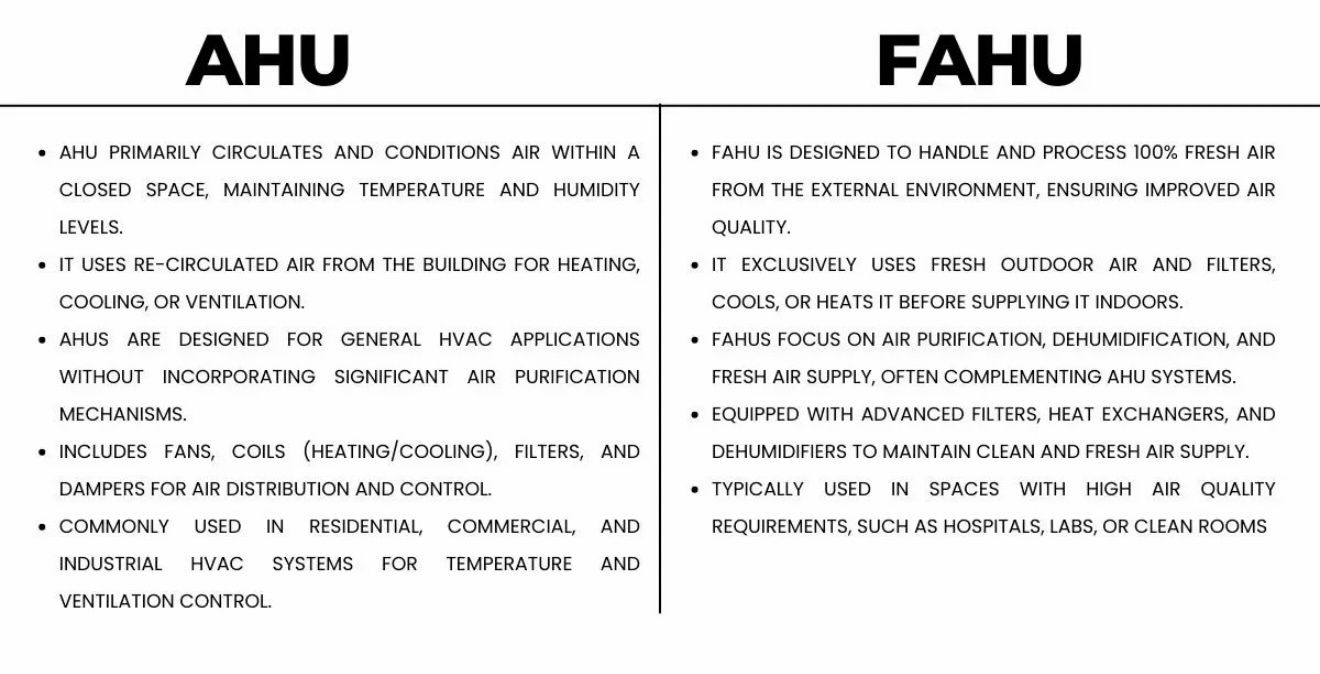
AHU vs FAHU – Key Technical Differences Every HVAC Pro Must Know.
In modern HVAC design, selecting the right unit is crucial for performance, compliance, and efficiency. Here’s a breakdown:
AHU (Air Handling Unit)
Air Source: Mix of return air + fresh air
Functions:
• Filtration (G4 to HEPA as needed)
• Heating/Cooling (DX or chilled water coils)
• Humidification/Dehumidification
• Fan section (EC/plug fans for VFD control)
Energy Recovery: Often integrated with HRW or ERV
Application: Office buildings, malls, industrial spaces
Flexibility:
• Modular / Custom / Packaged
• Single or dual-duct, vertical or horizontal
Control: DDC/BMS-compatible for zoning and efficiency
FAHU (Fresh Air Handling Unit)
Air Source: 100% treated outdoor air only
Functions:
• Primary filtration (G4/F7), pre-treatment coils
• No return air mixing – dedicated to ventilation
• Integrated enthalpy wheel or heat recovery coil for energy efficiency
Application:
• Cleanrooms, hospitals, pharma, data centers, labs
• Ensures IAQ & positive pressure
Design Considerations:
• May include UVGI systems, CO₂/VOC sensors
• High latent/sensible load handling, especially in tropical climates
Pro Tip for Design Engineers 👨💻
Pairing FAHU with AHU enables dedicated outdoor air systems (DOAS) – optimizing air quality and thermal load management. This hybrid strategy meets ASHRAE 62.1/90.1, LEED, and Green Building compliance.
🧠 Knowing when to deploy AHU vs FAHU isn’t just about air—it’s about health, energy, and code compliance..